Inside RustConf 2026: What we heard from the Rust community
 By Jenna O'BrienSeptember 22, 20261 min read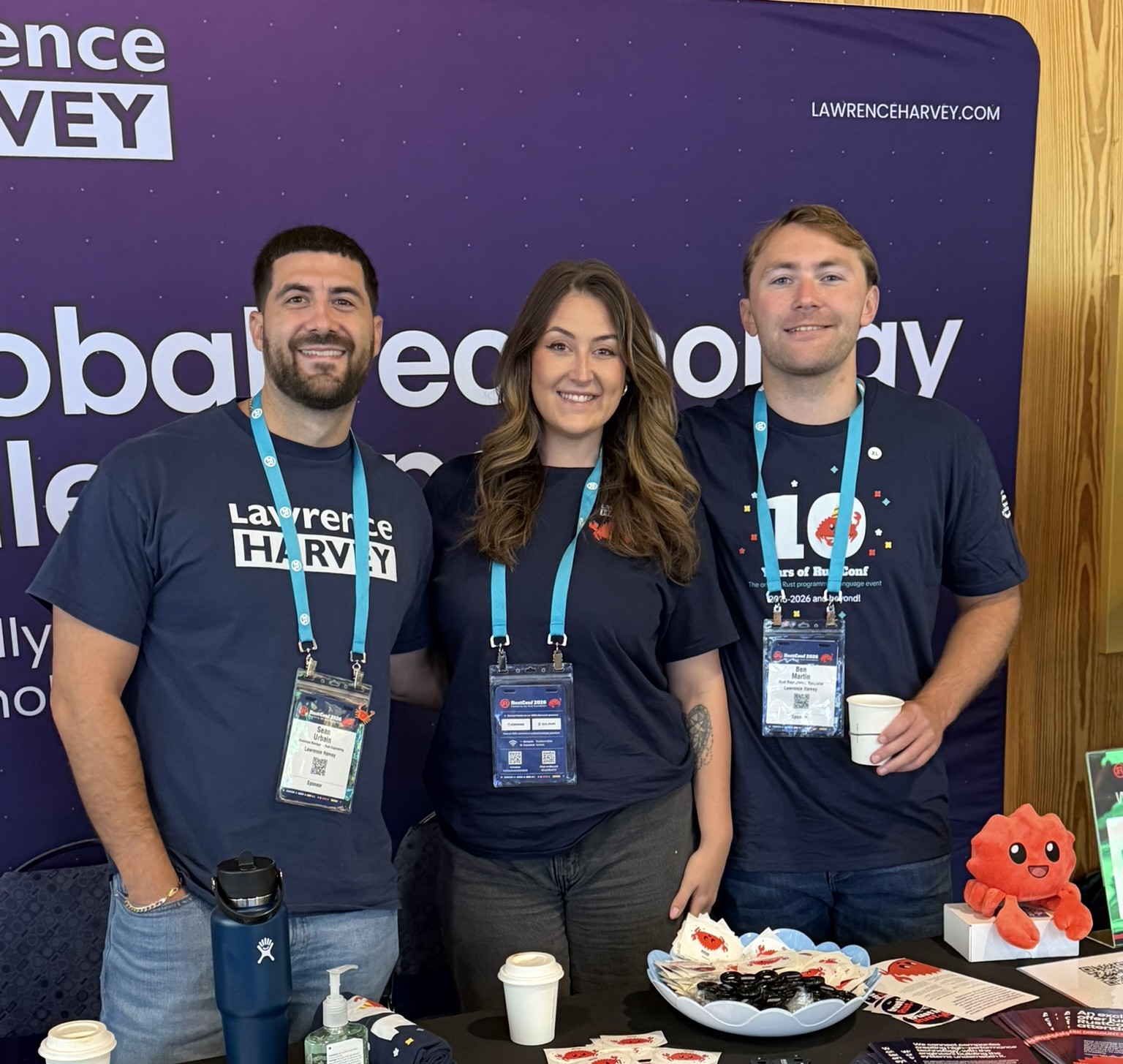

Share
After a busy few days in Montreal, the Lawrence Harvey team came home from RustConf with a lot to talk about.
We joined this year’s conference as the Official Recruiting Partner, with Ross Townsend, Shanice Gaskell, Sean Urbain, Arianna Cook and Ben Martin all making the trip.
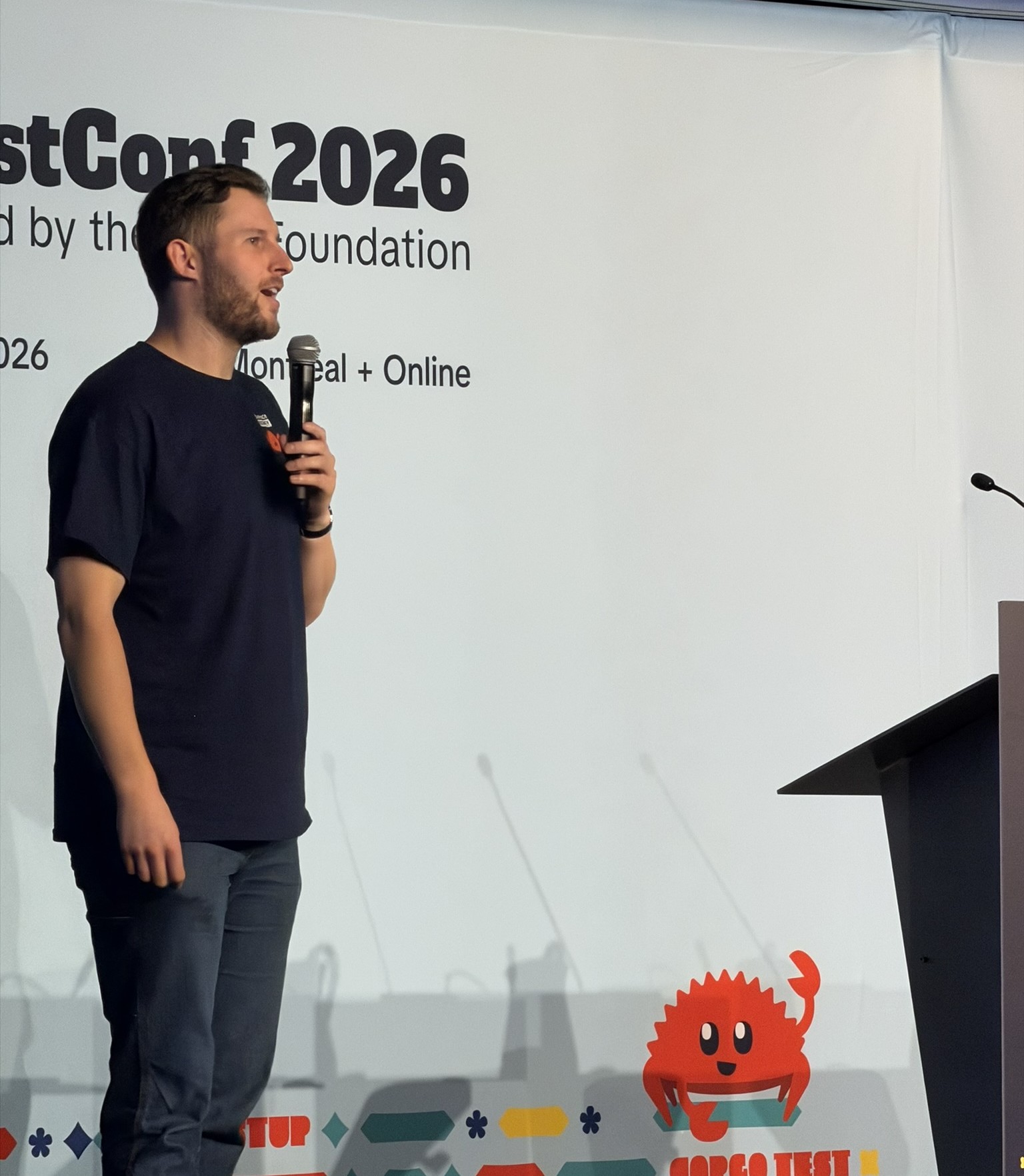
There was plenty happening for the team throughout the week. Ross emceed the main stage, spoke at the Career Crawl and co-hosted Friday’s UnConference, while the rest of the team spent as much time as possible meeting engineers, founders and others working within Rust.
Now that everyone has had a chance to recover, we caught up with the team about what they heard, what surprised them and what they’re bringing home from RustConf.
A different energy in the room
Ross probably had one of the busiest RustConfs of anyone on the team.
“It felt like I never stopped, but in the best kind of way. There wasn’t one particular thing that took up all of my time, but I was constantly pushing myself into new spaces, events and discussions. It was one of the most rewarding experiences I have had.”
Having been at RustConf last year too, Ross noticed a real difference this time around.
“This year had a different energy to last year. The room felt alive and there was a consistent buzz to the event, plus a ton of social events after hours that just didn’t happen last year.”
Being involved in so many different parts of the conference also meant Ross got to speak to people throughout the Rust community. When we asked what kept coming up in those conversations, one topic stood out: AI and what its rapid adoption could mean for Rust.
“AI adoption has become increasingly prevalent to an explosive level over the last year, and the debate on how it changes Rust and enables so many more people to adopt Rust is burning brighter than ever.”
Ross also saw growing interest from major companies as another sign of how the Rust market is developing. But what stood out most was that, as the community grows, it hasn’t lost the welcoming feel that drew so many people to it in the first place.
“The community is growing, and everyone is embracing the welcoming attitude Rust offered when it was gaining adoption. It’s a great place to be.”
Rust adoption is expanding into more areas
Ross wasn’t the only one hearing conversations about where Rust is heading.
Away from the talks, Ben Martin spent much of the week speaking with engineers and companies about what they were building and where Rust fitted into those plans.
“There was a lot of excitement from engineers around seeing Rust move beyond being a niche or specialised language and becoming something that more companies are actively building with.”
The conversations varied depending on who he was speaking to. Some startups were considering Rust for new products from the beginning, while larger organisations were using it to test and build new tools, products and infrastructure.
The range of use cases caught Ben’s attention too. He regularly works with Rust engineers in backend and infrastructure, but in Montreal he heard plenty about AI, developer tooling, gaming, graphics, embedded systems and other performance-sensitive applications.
One of his biggest takeaways, though, was not to get carried away by growing adoption.
“Rust is still a tool. You need to start with the problem you're trying to solve and determine whether Rust is the right fit. It won't be the best choice for everything, but it can be particularly effective for backend, systems, embedded and performance-sensitive applications.”
RustConf also gave Ben a much more international view of the market.
His day-to-day work is focused on North America, but over the course of the week he met engineers and founders from France, Poland, Germany and elsewhere in Europe.
“Those conversations made me think more about how global the Rust ecosystem has become. Being focused on the North American market, it's easy to look at Rust through that lens, but there is clearly a strong community and growing adoption across Europe and the UK as well.”
Seeing the Rust community through fresh eyes
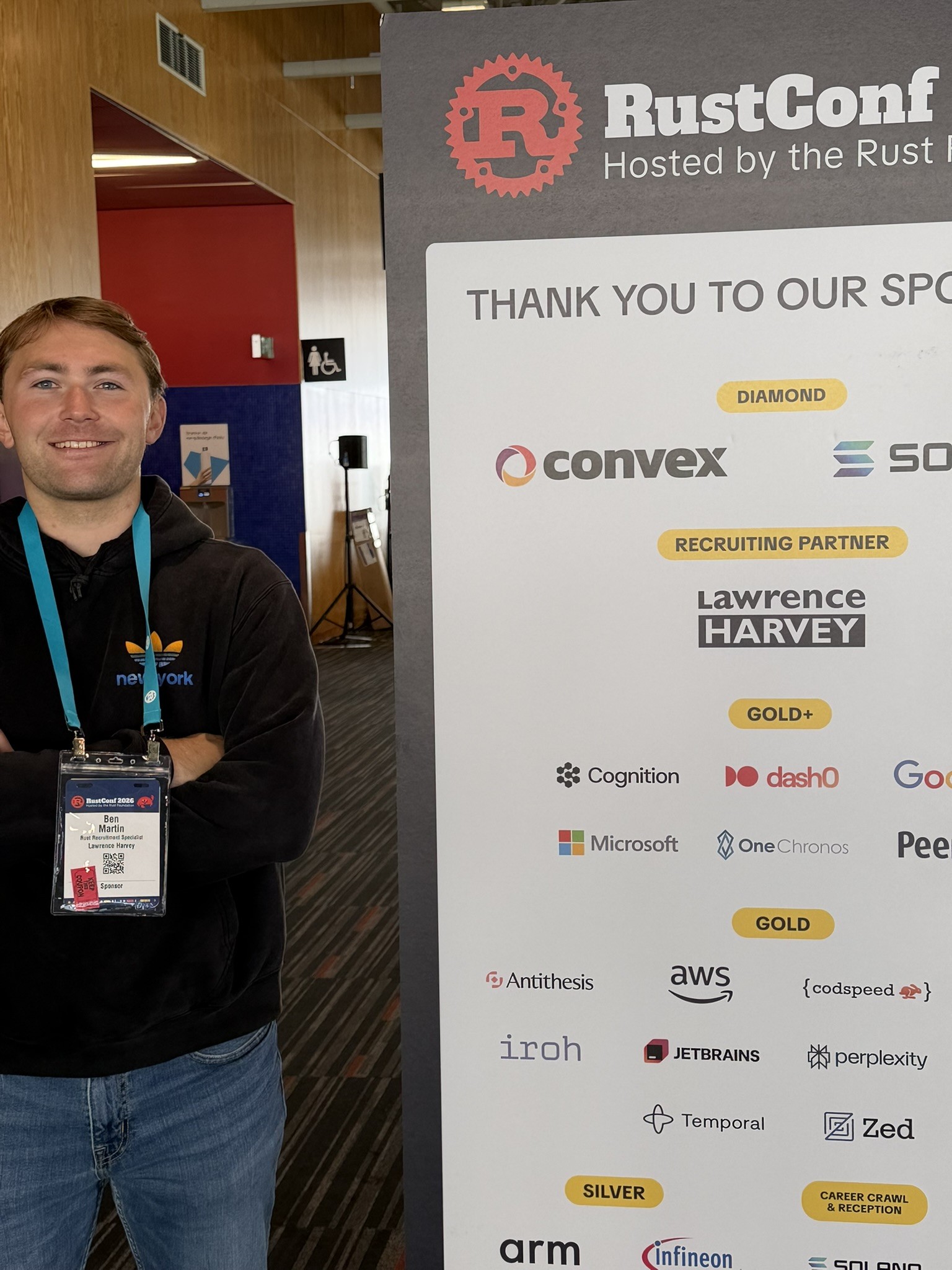
For Arianna Cook, RustConf came only a few months after joining Lawrence Harvey.
“Honestly, it was a bit surreal. Being only a few months into the role and suddenly standing in a room with some of the most influential people in the Rust ecosystem was both exciting and humbling.”
Rust is a market where a lot of relationships begin online, so being in Montreal gave Arianna the chance to finally meet some of those people face-to-face.
“Rust is such a community-centric market, and being there in person let me put faces to names and build relationships in a way that just isn't possible over LinkedIn or email.”
It was also a pretty good crash course in the technical side of the market.
“Being able to pick people's brains on the technical side accelerated my market knowledge far faster than I could have managed on my own. It set the tone for how I want to approach this role going forward.”
What stood out most was how willing people were to share what they knew.
“People genuinely want the language to succeed and are invested in helping each other grow, which is rare to see at that scale.”
Arianna also came away with a better understanding of some of the hiring challenges that sit behind Rust adoption. Companies may want to build with Rust, but finding the right engineers can still be difficult, particularly when the skills they need are highly specialised.
For someone only a few months into working in the market, RustConf made the importance of knowing the people behind it much more tangible.
Bringing more women into the Rust community
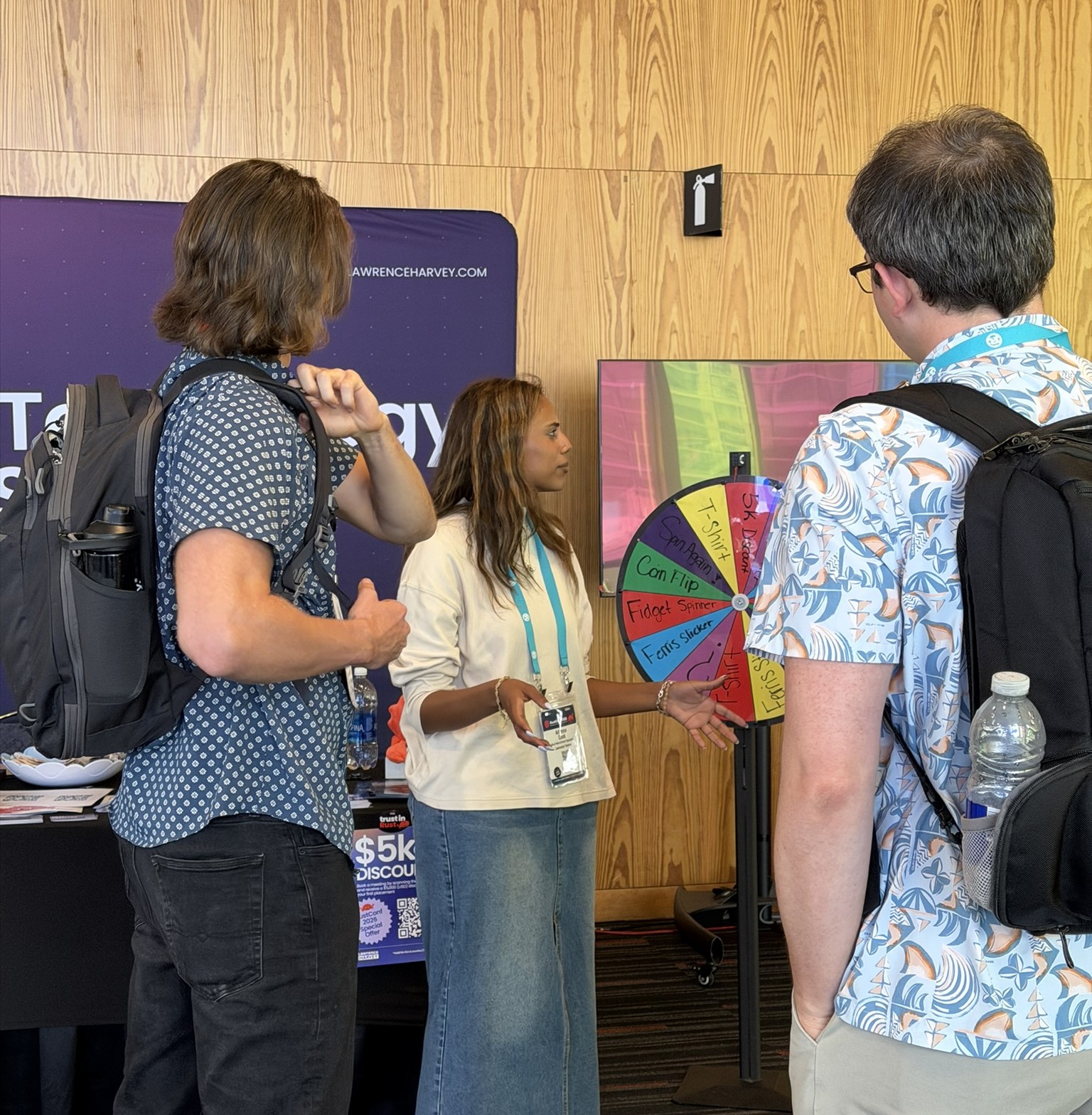
That welcoming side of RustConf stood out to Shanice Gaskell too. Spending much of the conference at the Lawrence Harvey table, she saw plenty of people who had previously only known each other through Discord or GitHub finally meet face-to-face, including a number of women within the community.
“It was one of my favorite parts of the whole week. The Rust community are some of the most welcoming people I've met in tech. Nobody cared whether you'd been writing Rust for ten years or ten weeks, and people went out of their way to pull newcomers into conversations.”
Having also spent time around Rust NYC and Rust LA, Shanice believes visibility and mentorship both have an important role to play in bringing more women into Rust.
“Seeing women on stage and doing keynotes makes a huge difference. If a woman comes to Rust NYC for the first time and the person giving the talk looks like her, she's far more likely to come back next month.”
For Shanice, it also means reaching people who might not naturally put themselves forward and making sure newcomers have people they can learn from along the way.
Her biggest reflection from Montreal summed up much of what the wider team experienced too:
“I left RustConf 2026 thinking about how much of a community gets built in the conversations nobody puts on the schedule.”
Taking RustConf back to Rust LA
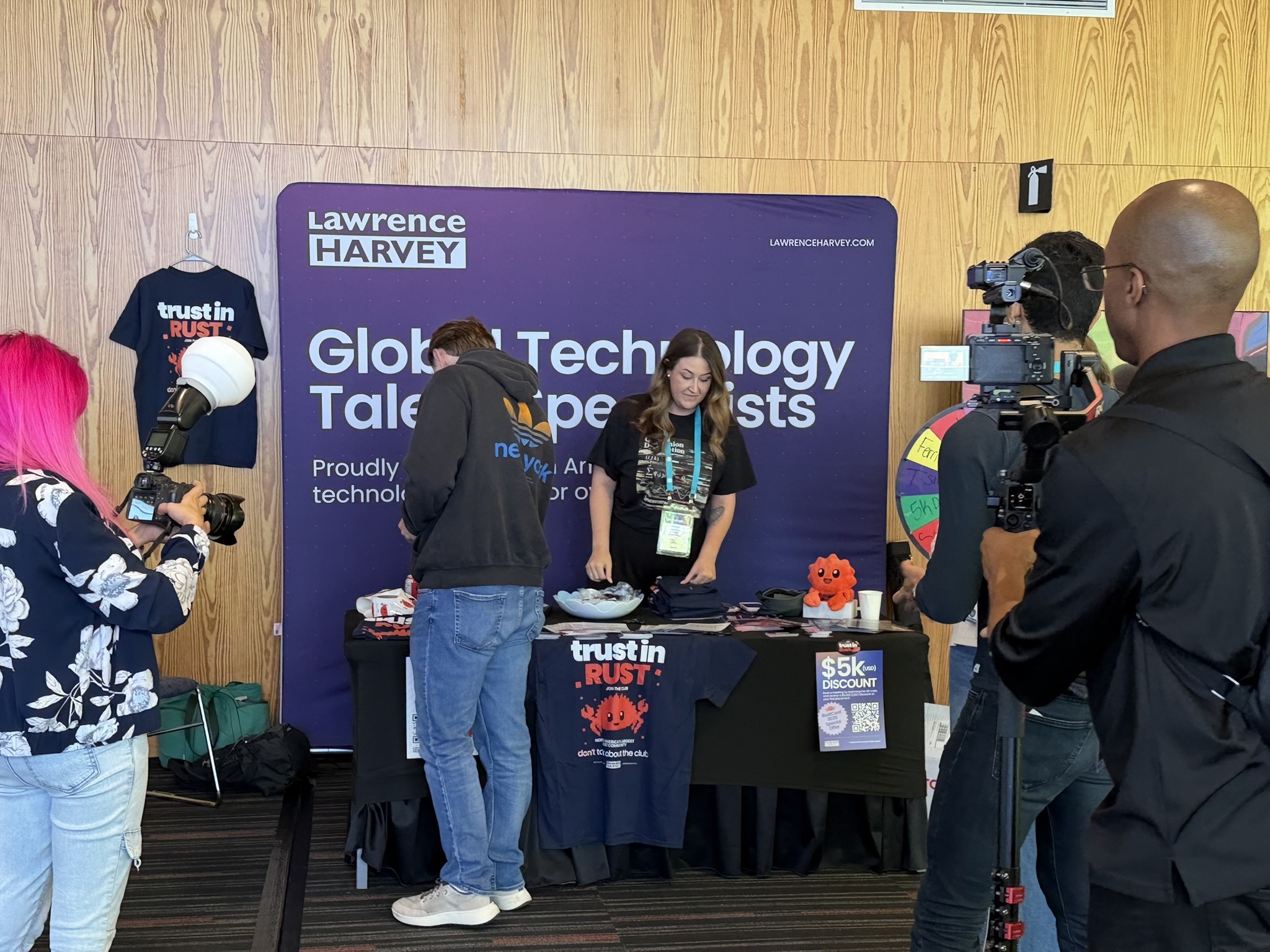
For Rust LA Community Organizer Sean Urbain, the week also provided plenty of inspiration for what the local community could do next.
“There was a lot of inspiration I got from the event, from ideas on different ways to run an event: lightning talks, industries, hackathons, etc. that I am going to trial in 2027.”
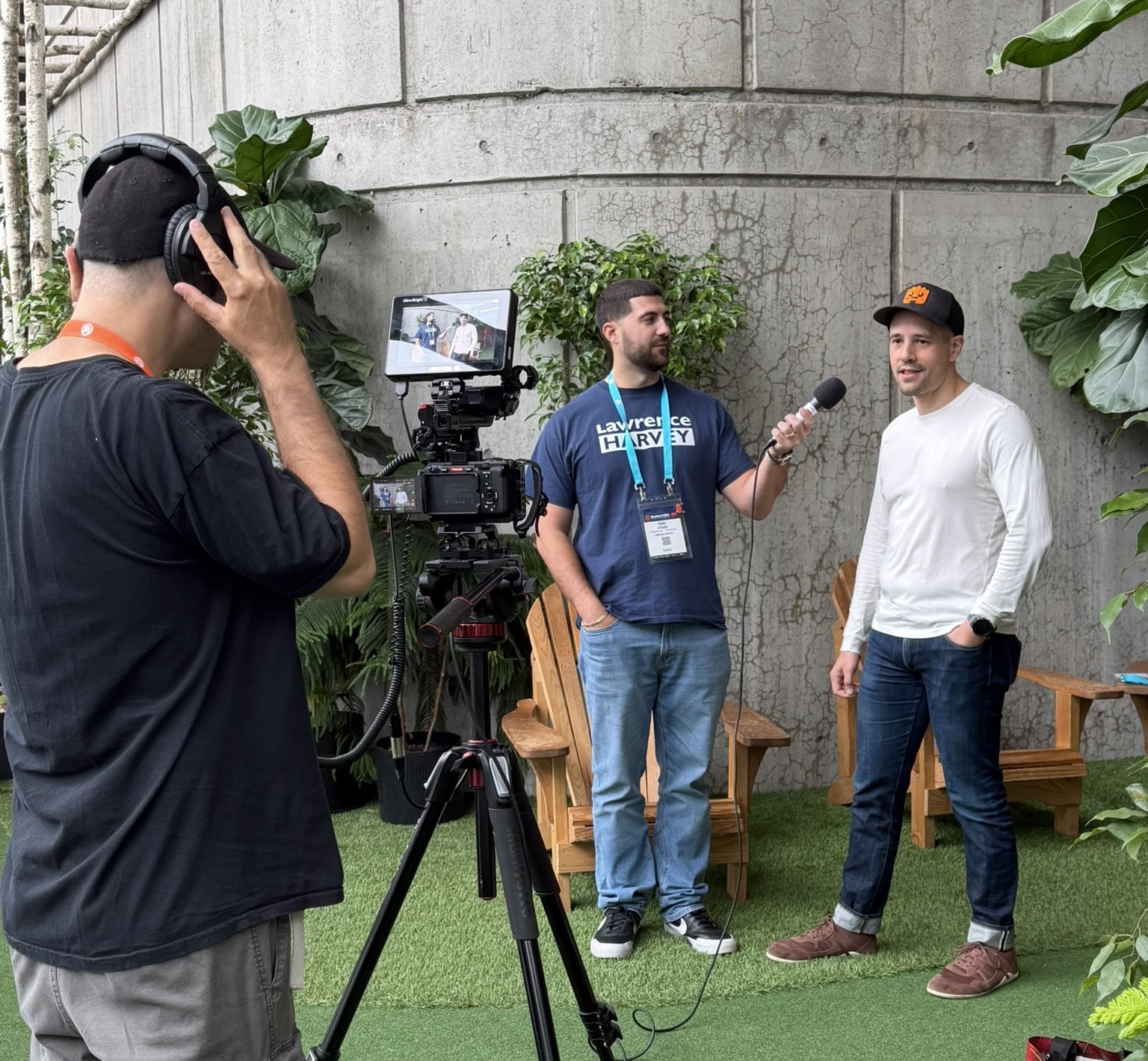
Sean also spent time with Jess Izen and the Rust Commercial Network discussing ways to encourage more innovation within local Rust communities, while meeting others interested in building communities in Montreal and Seattle.
There is plenty he wants to bring back to Los Angeles, and we’ll be hearing more about some of those plans in 2027.
What happens after RustConf 2026?
One of the biggest announcements during RustConf offered another sign of how Rust adoption is developing: Microsoft confirmed that Rust is now a Tier-1 language internally, putting it alongside C++, C# and TypeScript as one of the company’s best-supported languages for internal development.
But the story our team came home talking about wasn’t only what was announced on stage.
It was Arianna finally meeting people she had previously only spoken to online. It was Shanice watching women within the community find each other in the room. It was Ben realising just how international the Rust ecosystem has become. It was Sean leaving with ideas he wants to try at Rust LA. And it was Ross seeing a different energy around the conference compared with a year ago.
RustConf brought a lot of people into the same place for a few days. What happens between now and the next one is the interesting part.
For Lawrence Harvey, that means continuing to support the communities we’re already part of through Rust NYC and Rust LA, staying close to the engineers and companies building with the language, and seeing where the conversations started in Montreal take us next.
Enjoy more articles

Looking for your next role in technology?
We’ve been helping clients achieve the results they need for over 20 years. In that time, we’ve refined ou. We’ve been helping clients achieve the results they need for over 20 years. In that time, we’ve.